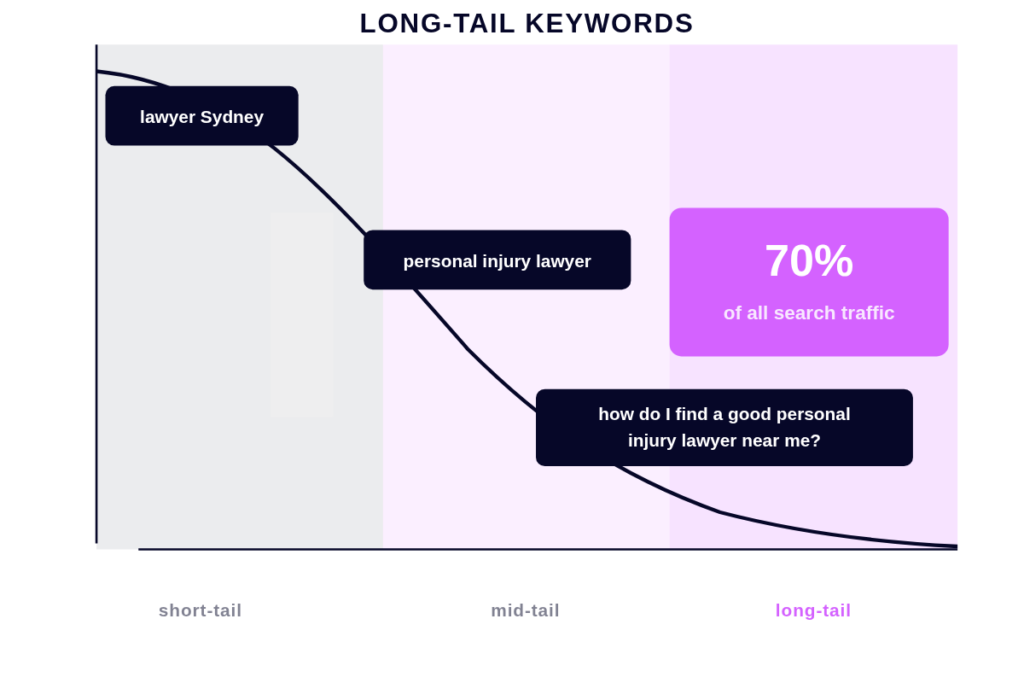
What Is a Long-Tail Keyword?
A long-tail keyword is simply a more specific search query that includes multiple words and reflects a clear intent.
For example:
Instead of searching for SEO, someone might search for: SEO specialist for tradies in Brisbane
Instead of web design, they might search for website design for electricians Gold Coast
These longer searches tell you exactly what the user is looking for. They’re not just browsing – they already have a need, and they’re actively looking for a solution.
The more specific the search, the more qualified the traffic tends to be.
Why Long-Tail Keywords Are So Effective for SEO
Many businesses focus on high-volume keywords because they appear more attractive. However, these keywords often bring in broad, unqualified traffic.
Long-tail keywords work differently.
They typically have:
- Less competition
- Clearer search intent
- Higher conversion potential
- Faster ranking opportunities
Instead of trying to attract everyone, you’re attracting the right audience – people who are actively searching for what you offer
Less Competition Means Better Ranking Opportunities
Short, generic keywords such as SEO, Marketing or Website design are dominated by large, established websites.
But when you target long-tail keywords such as:
- SEO specialist for plumbers Brisbane
- Website design for tradies Australia
- Local SEO for physiotherapists Gold Coast
You’re competing in a much smaller space. This makes it easier to rank, even if your website is newer or has lower authority. Google also prefers content that closely matches user intent, which makes long-tail keywords even more effective.
Long-Tail Keywords Bring Better Quality Traffic
Someone searching for “SEO” may still be researching, learning, or simply browsing. However, someone searching for “SEO specialist for tradies Brisbane” is much closer to making a decision. They know what they want and are actively looking for a provider.
This type of traffic is:
- More qualified
- More relevant
- More likely to convert
You don’t necessarily need thousands of visitors. A smaller number of highly targeted users often produces better results.
Long-Tail Keywords Typically Convert Better
Long-tail searches usually come from users who are further along in their decision-making process.
They may already:
- Understand their problem
- Know what service they need
- Be comparing providers
- Be ready to enquire
Because of this, long-tail traffic often leads to:
- More enquiries
- Better leads
- Higher conversion rates
- Stronger return on investment
The volume may be lower, but the value per visitor is much higher.
How to Find Long-Tail Keywords
Finding long-tail keywords doesn’t require advanced tools. Many opportunities are already available in places you use every day.
Use Google Autocomplete
Start typing a keyword into Google and look at the suggestions that appear.
For example, typing SEO for may show:
- SEO for tradies
- SEO for small business
- SEO for ecommerce
- SEO for dentists
These suggestions are based on real searches, which makes them valuable keyword opportunities.
Check Related Searches
At the bottom of Google’s search results page, you’ll find related searches.
- These can provide additional ideas such as:
- SEO packages Australia
- Local SEO services Brisbane
- SEO consultant near me
This is a quick and simple way to discover long-tail keyword variations.
Use Simple Keyword Tools
Tools like the following can help expand your keyword list:
These tools help you identify:
- Keyword variations
- Common questions
- Search intent
- Seasonal trends
They’re especially useful when planning content.
Listen to Your Audience
Some of the best long-tail keywords come directly from your audience.
Look at:
- Customer enquiries
- Emails
- Sales calls
- Reviews
- Comments
- FAQs
If someone asks:
“Do you offer SEO for tradies?”
That’s a keyword opportunity.
These real-world phrases often perform extremely well because they match how users actually search.
How to Use Long-Tail Keywords in Your Content
Once you’ve identified long-tail keywords, it’s important to use them strategically.
One Keyword Per Page
Each long-tail keyword represents a specific search intent.
For best results, create one dedicated page for each keyword or topic. This helps Google understand exactly what your page is about and improves your chances of ranking.
Place Keywords Naturally
Include your keyword in key areas such as:
- Page title
- H1 heading
- URL
- Subheadings
- Introduction
- Body content
- Image alt text
However, keep the writing natural and avoid overusing the keyword.
Focus on Clear, Helpful Content
You don’t need extremely long content. What matters most is clarity and usefulness.
Your content should:
Answer the user’s question
Provide helpful information
Be easy to read
Match the search intent
Google increasingly rewards content that provides clear value.
Write for People First
Although SEO is important, your content should always be written for users.
Use natural language, clear explanations, and a conversational tone. Avoid keyword stuffing or overly technical wording.
If your content is helpful and easy to understand, it will perform better.
Why Long-Tail Keywords Work So Well
Long-tail keywords allow businesses to:
- Compete more easily
- Target specific audiences
- Generate better leads
- Improve conversion rates
- Achieve faster SEO wins
They’re particularly effective for:
- Local businesses
- Service providers
- Niche industries
- New websites
Instead of trying to rank for everything, you focus on the searches that actually matter.
Final Takeaway
Long-tail keywords may not generate the highest traffic numbers, but they deliver far more valuable visitors.
They help you attract people who are actively searching for your services, not just browsing.
In SEO, quality of traffic matters more than quantity – and long-tail keywords are one of the most effective ways to achieve that.
This is something I often talk about through my three SEO pillars: visibility, clarity, and conversion. Long-tail keywords help you get found, but it’s the structure of your pages and how clearly you communicate your offer that turns that traffic into leads.
I’ll also be sharing more about this framework in an upcoming SEO course, focused on helping service-based businesses simplify SEO and build strategies that actually drive enquiries.
✍️ Author Bio
Constance Zaborov is the founder of Digital Spark Marketing, based in Australia. Despite being French-born, she’s known for her plain-English, no-headache SEO approach. She focuses on clear, practical strategies that drive real enquiries – not vanity metrics. Constance helps small service-based businesses improve visibility, attract qualified traffic, and convert more leads through SEO-first websites, local SEO, and future-proof strategies built for Google and AI-driven search.