How Custom Website Design and SEO Work Better Together
Learn how search strategy, information architecture, content and conversion planning can shape a custom website before development begins.
SEO works best when it informs the structure of a website, not when it is added after launch. Search demand can help define services, page hierarchy and internal links, while design makes those pages credible and easy to act on.
What matters now
- Research customer language before finalising navigation and page scope.
- Give each important service a useful, distinct destination.
- Plan redirects, metadata, tracking and launch checks before the old site changes.
Related Loom Digital resources: web design services, custom web design and website redesigns.
Understanding Custom Website Design and SEO
Custom website design and SEO are like the dynamic duo of the digital world. They work together to create a website that’s not just pretty but powerful.
SEO Web Design
At its core, SEO web design is about making your website easy for search engines to understand. This means following best practices like using clean code and providing clear content. When search engines can easily read your site, they rank it higher in search results. And who doesn’t want to be on the first page of Google?
A well-designed site also guides users smoothly from one page to another. Think of it as a digital tour guide, leading visitors to the information they need.
User Experience
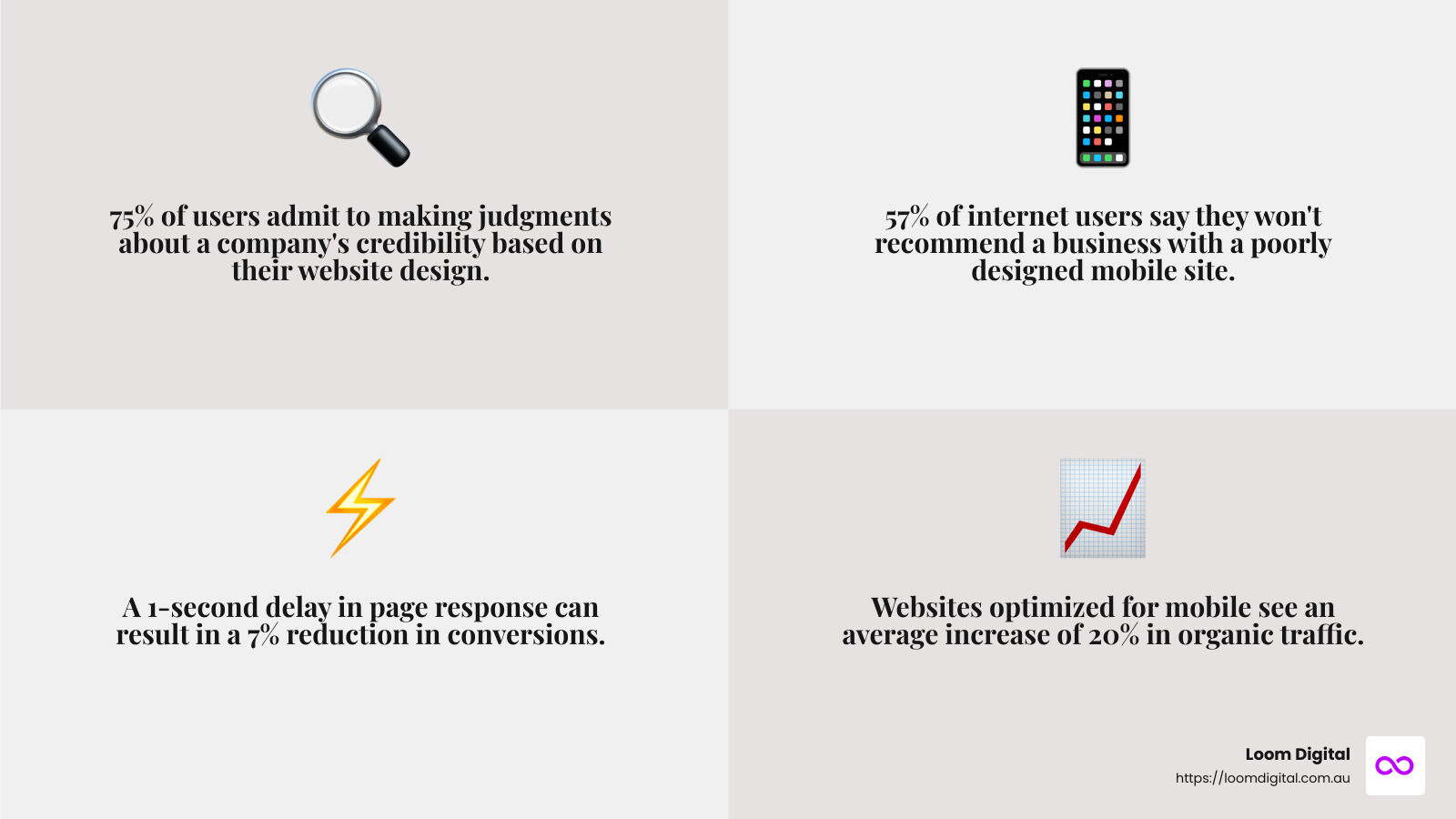
User experience is all about how visitors feel when they use your site. Is it easy to find information? Does it load quickly? These questions are crucial. A positive user experience keeps visitors on your site longer, increasing the chance they’ll become customers.
Mobile Responsiveness
Did you know that over half of all web traffic comes from mobile devices? That means your site must look and work great on smartphones and tablets. Google even uses mobile-first indexing, meaning it looks at your mobile site first when deciding where to rank it.
A mobile-responsive design ensures your site adapts to any screen size, providing a seamless experience for users whether they’re on a desktop or a phone. This not only improves user satisfaction but also boosts your SEO.
In summary, custom website design and SEO are essential for creating a site that ranks well and delights visitors. By focusing on these elements, you ensure your digital presence is both effective and engaging. Next, we’ll dive into the key elements that make a website truly SEO-friendly.
Key Elements of an SEO-Friendly Custom Website
Creating a custom website design and SEO strategy is like building a house. You need a solid foundation and the right materials. Let’s explore the key elements that make your website both user-friendly and SEO-friendly.
Code Optimisation
Think of code optimisation as the backbone of your website. Using clean, efficient code like HTML and CSS is essential. Avoid Flash, as it can hinder your site’s search engine rankings. Search engines find it hard to crawl Flash, which can leave your site in the dark.
Mobile Friendliness
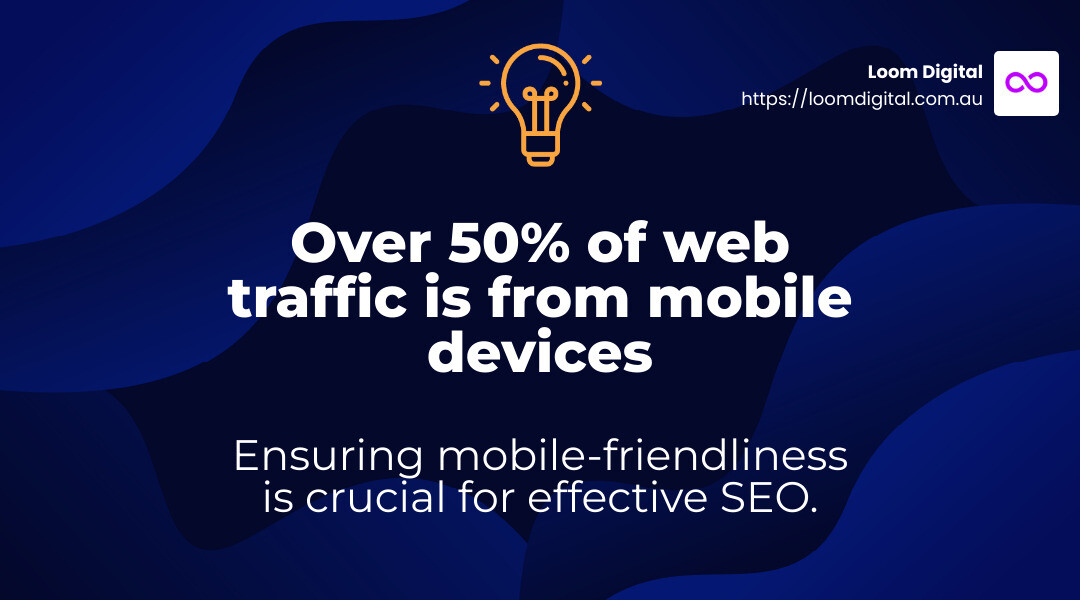
With more than half of all web traffic coming from mobile devices, having a mobile-friendly site is crucial. Google uses mobile-first indexing, meaning it evaluates your mobile site first. A responsive design ensures your site looks great on any device, boosting both user satisfaction and SEO.
Readability
Readability is about making your content easy to digest. Use simple language, short paragraphs, and clear headings. This not only helps visitors understand your message but also keeps them engaged. Engaged visitors are more likely to convert into customers.
Quality Content
High-quality content is king. Provide valuable information that meets your audience’s needs. Use relevant keywords naturally to help search engines understand what your page is about. This improves your chances of ranking higher in search results.
Images
Images can improve your site’s appeal, but they need to be optimised. Use alt tags to describe images, helping search engines understand their content. Compress images to improve load times, ensuring a faster, smoother user experience.
Navigation
Good navigation is like a map for your website. It guides users to the information they need. Keep it simple and intuitive. A well-structured menu helps visitors find what they’re looking for quickly, reducing bounce rates and improving SEO.
Website Structure
A solid website structure is crucial for both user experience and SEO. Organize your content logically, using categories and subcategories. This makes it easier for search engines to crawl and index your site, improving your rankings.
By focusing on these key elements, you can create a custom website design and SEO strategy that improves your online presence. Next, we’ll discuss how to implement these strategies effectively.
Implementing a custom website design and SEO strategy involves several crucial steps. Let’s break it down into actionable tasks: keyword selection, URL optimisation, heading tags, call to action, and backlinks.
Keyword Selection
Keywords are the foundation of SEO. Think of them as the search terms your audience uses to find your products or services. Start by conducting in-depth keyword research to identify terms that are relevant to your business and have a high search volume.
Use tools like Google Keyword Planner or SEMrush to find these keywords. Focus on long-tail keywords, which are specific phrases that usually have less competition and a higher conversion rate. For instance, “eco-friendly yoga mats” is more targeted than just “yoga mats.”
URL Optimisation
Your website’s URLs should be clean and descriptive. A well-optimised URL structure helps search engines understand your site’s hierarchy and improves user experience.
For example, instead of a URL like “www.example.com/page1?id=123”, use “www.yourwebsite.com/eco-friendly-yoga-mats”. This is not only easier for users to read but also signals to search engines what the page is about.
Heading Tags
Use heading tags (H1, H2, H3, etc.) to structure your content. These tags help search engines understand the main topics of your page and improve readability for users.
The H1 tag should include your main keyword and clearly state the page’s topic. Subheadings (H2, H3) can break down content into sections, making it easier for visitors to scan and find the information they need.
Call to Action
A strong call to action (CTA) guides your visitors toward taking a desired action, like signing up for a newsletter or making a purchase. Make your CTAs clear, compelling, and easy to find.
Use action-oriented language and place CTAs strategically throughout your site. For example, “Get Your Free Trial Now!” is more engaging than “Submit.”
Backlinks
Backlinks are links from other websites to your site. They are crucial for SEO as they signal to search engines that your content is valuable and credible.
Focus on building quality backlinks from reputable sites. You can achieve this through guest blogging, partnerships, and creating shareable content. Quality trumps quantity when it comes to backlinks.
By following these steps, you can effectively implement a custom website design and SEO strategy that boosts your visibility and drives results. Next, we’ll dig into the benefits of such a strategy.
Benefits of Custom Website Design and SEO
Investing in custom website design and SEO offers numerous advantages that can transform your business. Let’s explore some key benefits:
Brand Awareness
Custom website design helps your brand stand out in a crowded market. Unlike generic templates, a custom design reflects your unique brand identity and values. This distinctiveness increases brand recognition and leaves a lasting impression on visitors.
Moreover, SEO improves your brand’s visibility on search engines. By ranking higher for relevant keywords, more potential customers can find your business. As a result, your brand becomes more recognizable and trusted.
Website Traffic
Increased visibility leads directly to more website traffic. SEO techniques, like optimizing keywords and creating quality content, draw in more visitors from search engines.
A well-designed website also encourages users to explore more pages, reducing bounce rates and increasing time spent on the site. This combination of increased traffic and user engagement is crucial for online success.
Lead Generation
Custom websites are tailored to guide visitors through a seamless user journey. By designing intuitive navigation and strategic calls to action, you can effectively convert traffic into leads.
For instance, placing a contact form in a prominent location or offering downloadable content in exchange for email addresses can significantly boost lead generation. SEO further supports this by attracting the right audience who are more likely to convert.
Conversion Improvement
The goal of increased traffic and lead generation is to improve conversions. A custom website design allows you to create personalised user experiences that cater to your target audience’s needs and preferences.
SEO plays a vital role here by ensuring that the right people find your site. By understanding user intent and optimizing your content accordingly, you can provide a more relevant and engaging experience, leading to higher conversion rates.
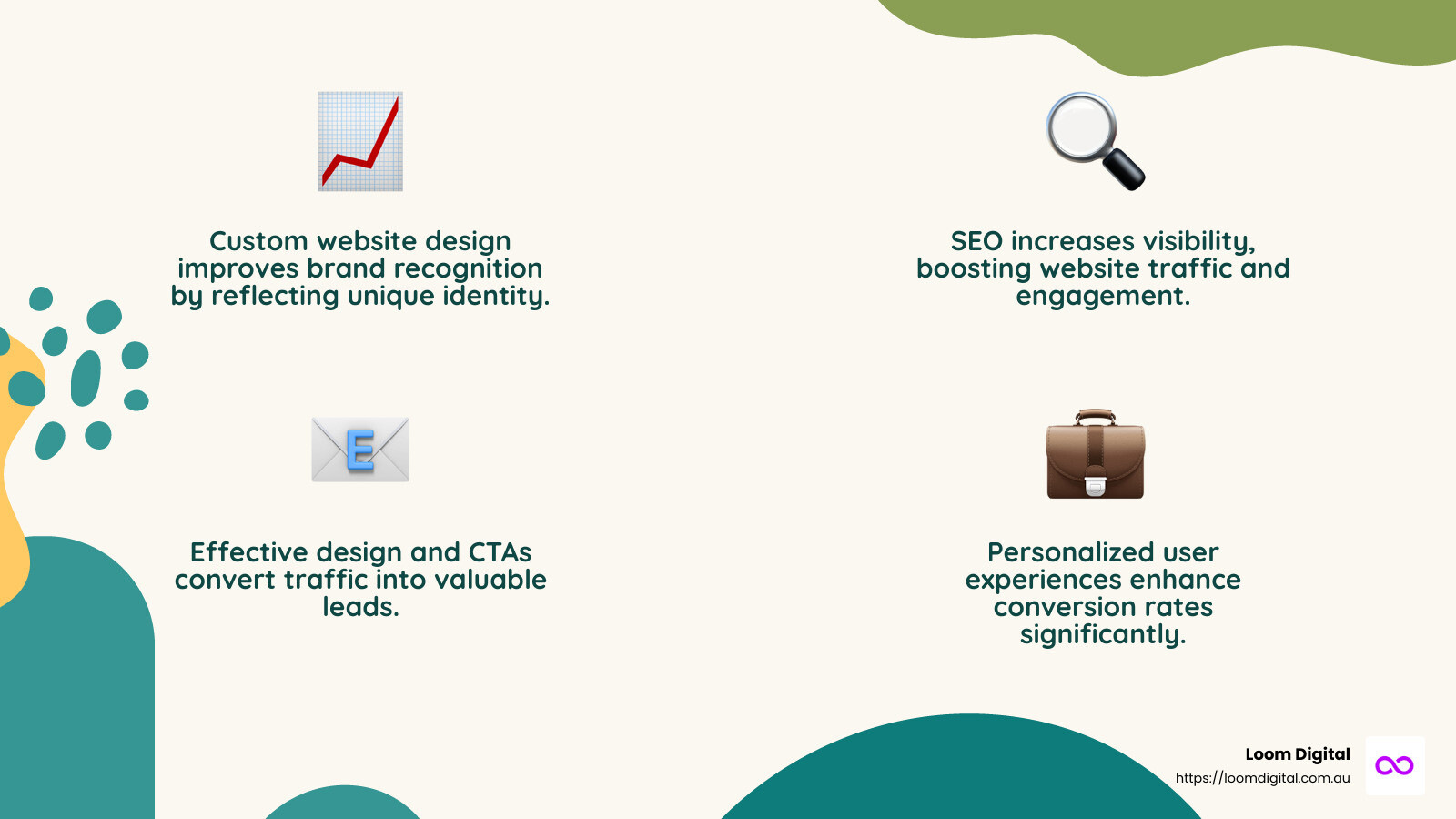
In conclusion, custom website design and SEO are powerful tools that can lift your brand, drive traffic, generate leads, and improve conversions. In the next section, we’ll address some frequently asked questions about these strategies.
Frequently Asked Questions about Custom Website Design and SEO
How to do SEO on a custom website?
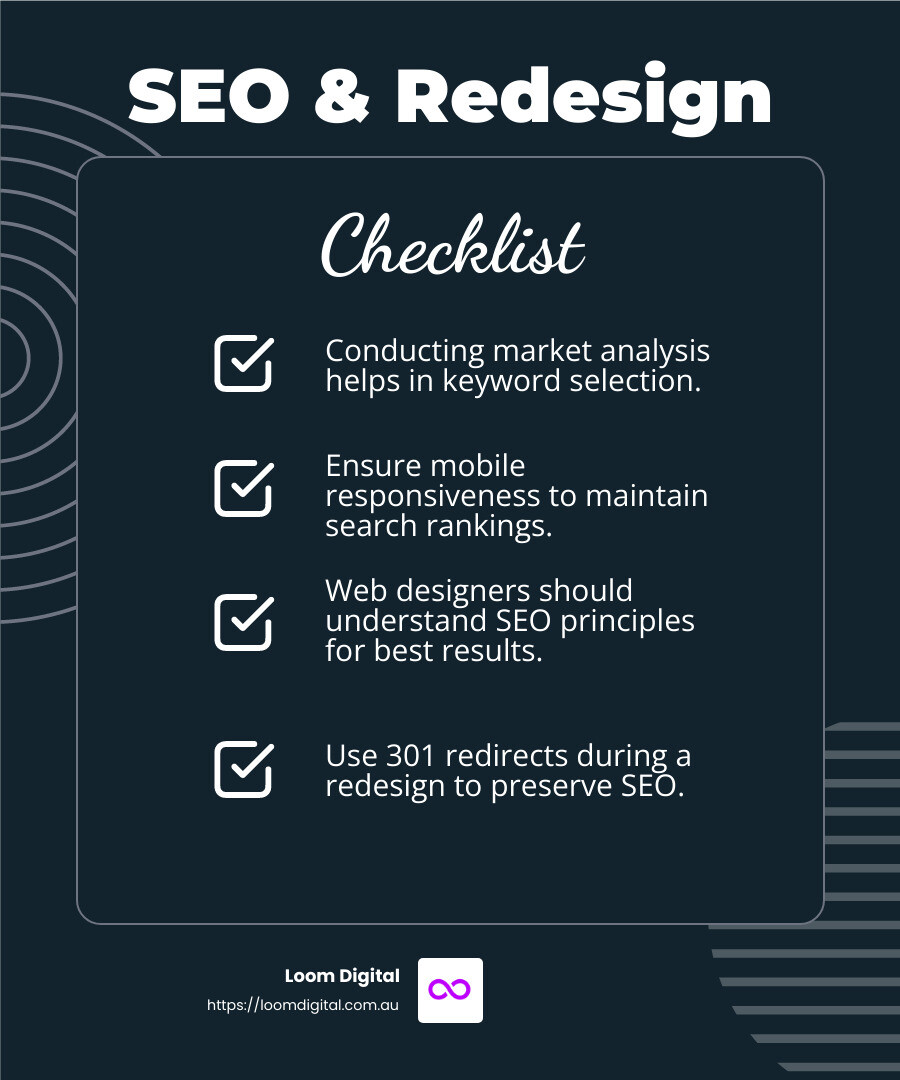
To effectively implement SEO on a custom website, start with a market analysis. This helps you understand your target audience and competitors. Knowing what your audience searches for allows you to select the right keywords. These keywords should be naturally integrated into your content, URLs, and meta tags to improve search engine visibility.
Mobile responsiveness is another critical factor. With over half of web traffic coming from mobile devices, ensuring your site looks and works well on all screen sizes is essential. Google’s mobile-first indexing means that a mobile-friendly design can boost your search rankings.
Do website designers do SEO?
Many website designers possess basic SEO skills, but their primary focus is on aesthetics and functionality. However, the roles of web designers often overlap with SEO specialists, especially when it comes to user experience. A well-designed website naturally supports SEO by providing clear navigation, fast loading times, and a structure that search engines can easily crawl.
When hiring a web designer, it’s beneficial to choose someone who understands SEO principles. This ensures that the design and SEO work hand-in-hand to create a seamless and effective online presence.
Does website redesign affect SEO?
Yes, a website redesign can significantly impact your SEO. Changes in site structure, URLs, or content can lead to fluctuations in organic traffic. To manage this, it’s crucial to plan the redesign carefully. Use redesign management strategies like 301 redirects to maintain search rankings and ensure a smooth transition.
Conducting a thorough SEO audit before and after the redesign can help identify areas that need attention. This proactive approach minimizes negative impacts and can even improve your site’s SEO performance in the long run.
By addressing these common questions, businesses can better steer the complexities of custom website design and SEO. This ensures a successful digital presence that attracts and retains the right audience.

Written by Jayden
Founder, SEO specialist and web designer
Practical advice from the person planning, building and reporting on the work at Loom Digital.