AI Overviews and SEO: What Australian Businesses Should Do Now
Wondering whether AI Overviews mean SEO is dead or your website needs a completely new strategy? Here is my practical, no-hype view on what Australian businesses should focus on now.

The short answer
Article summary
AI Overviews have changed how Google presents some answers, but they have not made good SEO obsolete. If you run an Australian business, focus on a website Google can access, genuinely useful answers, clear expertise and evidence people can trust. There are no secret AI tricks, and nobody can guarantee a citation, so every improvement should also help your customers.
- Start with crawlability and indexing before chasing AI visibility.
- Answer the real customer question early, then add useful depth.
- Bring first-hand experience and a clear point of view to the page.
- Make the author, business and supporting evidence easy to verify.
- Treat schema as clarification, not a shortcut to an AI citation.
- Measure visibility alongside engagement and qualified business action.
If you have been following the SEO conversation lately, you have probably heard one of two extremes: AI Overviews are about to replace websites, or they are just another feature you can safely ignore. I do not think either view is particularly helpful.
The honest answer sits somewhere in the middle. AI Overviews are changing how some people discover information in Google, and that deserves attention. But the work I would recommend to an Australian business is still grounded in the same things I have relied on throughout more than seven years working across over 250 SEO campaigns: make the website accessible, answer real customer questions, show your expertise and give people a reason to trust you.
You will see this work described as AI SEO, AEO, AIO or generative engine optimisation. The labels can make it sound like an entirely new discipline. In practice, most businesses do not need another pile of jargon. They need a clear understanding of what has changed, what has not and where their time is best spent. That is what I want to give you here.
If you would like help applying it to your own website, Loom Digital's AI SEO services bring the emerging AI search layer together with the technical, content and authority work that supports organic visibility more broadly.
What are AI Overviews, in plain English?
AI Overviews are generated answers that can appear near the top of Google Search. They are designed to help someone get their bearings on a question, especially when the topic is complicated or would normally take several searches to piece together.
Think of them as a starting point rather than the final word. Google can combine information from several sources, present a summary and then link to pages that help the searcher explore further. They do not appear for every query, and the sources can change between similar searches.
That last point matters. You are not trying to win one fixed blue-link position inside a predictable layout. You are trying to become a useful, relevant source for a range of connected questions. That is why a thin page written around one exact keyword is unlikely to be enough.
How does Google find the sources it shows?
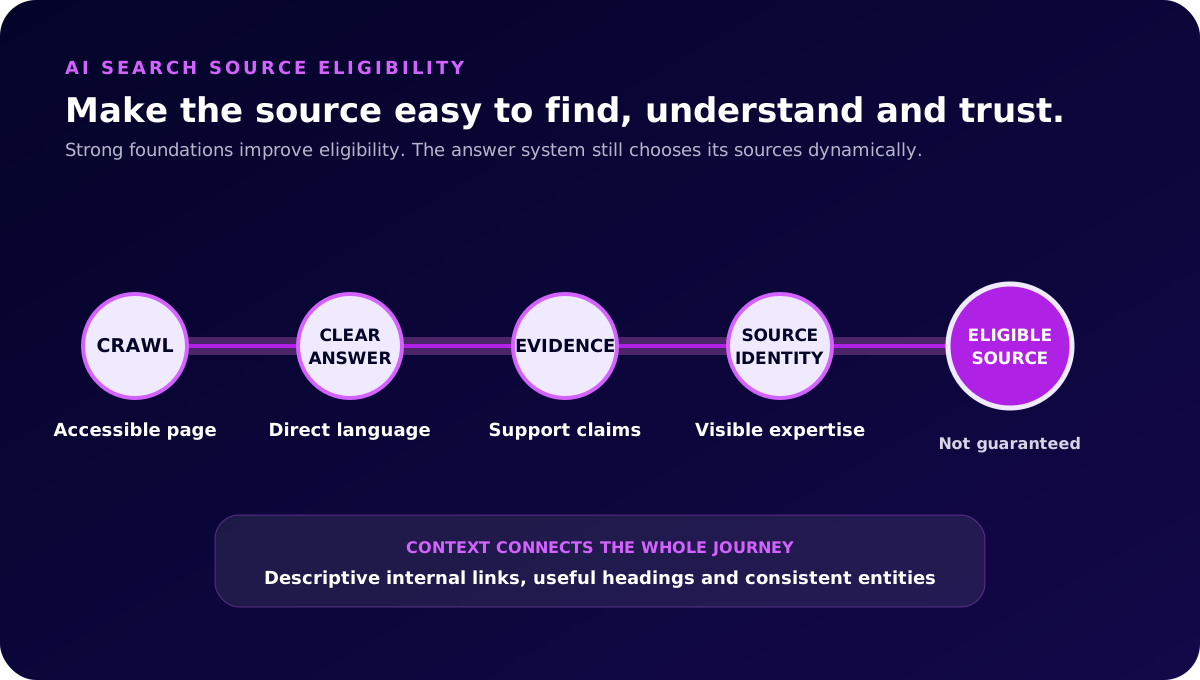
Google's own guidance for AI features is refreshingly straightforward. A page needs to be indexed and eligible to appear in Search with a snippet before it can be shown as a supporting link. There are no extra technical requirements just for AI Overviews or AI Mode.
Google may use what it calls query fan-out. In simple terms, the system can break a complicated question into several related searches, gather useful information across those subtopics and then build a response. This helps explain why strong topical context matters. A page should answer its main question clearly, but it should also help someone understand the comparisons, conditions and next decisions around it.
No SEO specialist can control the final source selection. I can improve whether a page is accessible, relevant, clear and credible. I cannot reserve your business a place in an AI answer, and I would be wary of anyone who says they can.
The reassuring part: there is no secret AI trick
This is usually the point where business owners breathe a little easier. You do not need to rebuild your website around a special AI format. You do not need a new category of schema, a separate page for every conversational variation or an “llms.txt” file that supposedly unlocks visibility.
Google's current advice still comes back to familiar SEO fundamentals: use crawlable links, provide a good page experience, keep important information in visible text, use helpful images or video and make sure structured data matches what the visitor can actually see.
That does not mean you should keep doing exactly what you were doing five years ago. Generic articles that simply repackage common knowledge now have even less to offer. The opportunity is to be clearer, more specific and more useful than the commodity information already available.
1. Start with a website Google can access
Before talking about citations, I would check whether Google can reliably access and understand the pages you want people to find. It sounds basic, but technical issues are often less exciting than AI tactics, so they get skipped.
Your important pages should return a successful response, be reachable through ordinary internal links and avoid accidental blocks in robots.txt or noindex directives. Canonical URLs should point to the version you actually want indexed. Important explanations should be available as text, not trapped inside an image, video or interaction with no readable alternative.
When I review a website, I also look at whether the page is genuinely part of the site's structure. A beautifully written guide that sits alone with no relevant internal links can be difficult for both people and search systems to place in context.
Use Search Console to inspect representative URLs and watch for indexing changes. If you are dealing with widespread rendering, canonical or crawling problems, start with technical SEO. Publishing more content on top of a shaky foundation usually creates more pages to diagnose later.

2. Answer the real question early
One of the easiest improvements you can make is to stop making the reader work so hard for the answer. If the heading asks a question, give them a useful response in the opening sentence or two. Then explain the context, evidence and exceptions.
This is not about writing robotic snippets for Google. It is about respecting the person who landed on the page. A business owner may be reading between meetings. A customer may be comparing three options on their phone. Clear answers help them decide whether your page is worth their time.
I like to think of it as answer-first, not answer-only. A two-sentence definition can be easy to extract but completely forgettable. The value comes from what follows: the trade-offs, practical examples, limitations and next step that make the answer useful in the real world.
3. Bring something only you know
This is where genuinely experienced businesses have an advantage. AI can summarise information that already exists. It cannot automatically reproduce the judgement you have built from doing the work, hearing customer objections, solving unusual problems and seeing where a seemingly simple decision becomes complicated.
For Loom, that might mean explaining why an indexing problem should be fixed before another content batch, or why a commercially valuable service page needs more than a keyword inserted into the heading. For your business, it could be a selection framework, a common installation mistake, a compatibility detail or an honest explanation of who should not buy a particular option.
You do not need to reveal confidential client information to show experience. Use anonymised patterns, labelled demonstrations, public case studies, original checklists and screenshots with sensitive details removed. Be specific about what you observed and avoid turning one experience into an unsupported industry statistic.
Google's guidance on generative AI content focuses on accuracy, quality and relevance. My view is similar: AI can be useful for research or structure, but the finished page still needs knowledgeable review, original thinking and responsibility for every claim.
4. Show readers who is behind the advice
Trust becomes much harder when an article feels like it came from an anonymous content machine. A reader should be able to see who wrote the page, why that person understands the topic and which business stands behind it.
Use a real byline and link it to a useful author or About page. Keep your business name, contact details and service information consistent. If the topic can change, show an honest publication date and update it when the substance changes, not every time someone corrects a typo.
Loom articles link my name to the story and experience behind Loom Digital. That is not there to decorate the author box. It gives you a way to judge whether the advice comes from someone who actually plans, builds and reviews SEO work.
5. Help people explore the next question
A good internal link should feel like the next part of the conversation. If someone understands AI Overviews but is still unsure how search is changing more broadly, the SEO trends and priorities guide is a useful next read. If their concern is technical eligibility, send them to the deeper technical explanation.
Descriptive links also help search systems understand how your pages relate. Build each page around one clear purpose, then connect it to useful supporting topics. Avoid creating several near-identical pages that compete for the same question, and avoid dropping a random list of “related links” at the bottom with no explanation.
6. Use structured data to clarify, not game
Structured data can help Google understand that a page is an article, who wrote it, when it was published and which image represents it. It is useful, but it is not a magic citation switch.
The rule I follow is simple: the markup should describe the page a person can see. Do not add FAQ markup when there is no visible FAQ. Do not mark up ordinary business claims as reviews. Do not create an author or organisation in schema that visitors cannot verify on the website.
Google's Article structured data documentation recommends accurate author URLs, dates and representative images. Use those details to remove ambiguity, then let the quality of the page do the real work.
What I would avoid
AI search has created a new market for shortcuts. Most of them sound attractive because they promise certainty in an area where nobody has much control. I would avoid:
- creating a new page for every wording variation or possible fan-out query;
- publishing large batches of generic AI text without expert review;
- buying a service that promises guaranteed citations or a fixed AI position;
- adding unsupported statistics simply because numbers look quotable;
- hiding the useful answer beneath a long sales introduction;
- inventing authors, testing, offices, experience or case-study results; and
- using schema that does not match the visible page.
Google's current guide to optimising for generative AI features makes a similar point. Creating content for every possible variation primarily to manipulate rankings or generated responses can fall into scaled content abuse. Build the page because it deserves to exist for the reader.
How I would measure AI search visibility
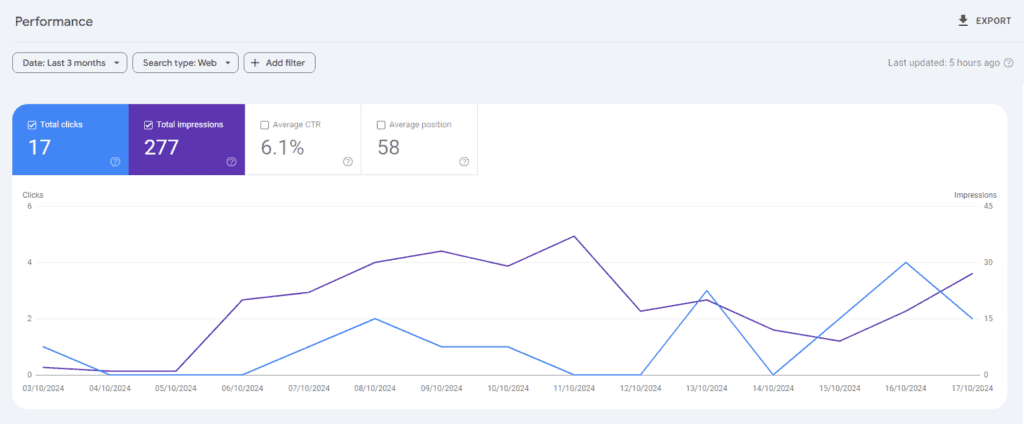
Google now has a dedicated Generative AI performance report in Search Console for AI Overviews and AI Mode. It is being rolled out gradually, so you may not see it in every property yet. Where available, it shows impressions by page, country, device and date.
That is useful, but keep it in perspective. An impression tells you that a page was shown. It does not tell you why it was selected, whether someone visited or whether the visibility contributed to an enquiry.
I would review the pages appearing in the report, then look at the wider journey. Are relevant people reaching those pages? Are they staying to read, exploring the next useful page and taking a qualified action? I would also record observed citations for a small set of commercially meaningful questions, noting the exact question, date, location, device and linked source.
A single screenshot is an observation, not a reliable visibility score. The result can change. What matters more is whether the website is becoming easier for the right people to discover, trust and choose.
Where I would start on your website
If this were my website, I would not begin by creating a separate AI content calendar. I would start with the pages already closest to a valuable customer decision: your main services, important categories, useful comparisons, strong case studies and the questions people ask before they contact you.
- Check that the priority pages can be crawled, indexed and rendered properly.
- Write down the genuine questions customers ask before choosing.
- Make sure each question has one clear page that owns the answer.
- Add a concise answer near the start, then support it with useful depth.
- Bring in first-hand experience, examples and current primary sources.
- Make the author, business identity and important dates easy to verify.
- Connect the page to the next useful question with descriptive links.
- Measure discovery, engagement and qualified action without promising inclusion.
This approach is less glamorous than chasing a secret AI hack, but it is far more defensible. A clearer service page, a properly documented case study or a fixed indexing problem can help traditional search, AI discovery and your sales conversations at the same time.
If you need to bring the writing and technical work together, combine content and copywriting with the right technical foundation and a broader SEO strategy. The goal is not to make your website sound like it was written for a machine. It is to make your expertise genuinely useful to the person asking the question.
Questions business owners are asking me
Can you guarantee that my business will be cited?
No, and I would not trust anyone who promises it. Google chooses sources dynamically, and similar questions can produce different answers. An SEO specialist can improve technical eligibility, content quality and source clarity. We cannot reserve a citation or fixed position.
Do AI Overviews make SEO obsolete?
No. Google says its normal Search eligibility and SEO foundations still apply. Your pages need to be crawled, indexed, understood and relevant before they can support an AI response. What has changed is the number of discovery surfaces and the way one complex question may be broken into connected subtopics.
Should every article have a summary?
I think a concise summary is genuinely helpful, especially on a long guide. It lets a busy reader decide whether the article is relevant. The important part is that the body earns the summary with evidence, explanation and practical advice. A summary should open the conversation, not replace it.
Will schema make the page citable?
No. Structured data can clarify supported details about the article, author or organisation. It cannot make a claim true or force an AI system to use the page. Keep the markup accurate and visible on the page.
How often should this content be reviewed?
Review it when the underlying service, product or official guidance changes. For a fast-moving subject like AI search, I would also schedule a regular factual check. Change the modified date when the substance changes, not simply to make the article look fresh.
Should we block AI crawlers?
Do not copy a generic robots file without understanding what each control does. Search visibility, model training and other grounding uses can involve different crawlers and settings. Review the current documentation, decide what matters to your business and get technical help if the trade-off is unclear.
The principle I keep coming back to is simple: make every improvement useful even when no AI citation appears. That protects your investment from depending on one changing search feature.
How to make answer-first content feel human
Answer-first content can still sound warm. Start with the response you would give if a customer asked the question during a meeting. Use plain language. Acknowledge the part that is genuinely uncertain. Then explain what you would look at before making a recommendation.
Vary the rhythm. Some questions need a short definition. Others need an example, a comparison table or a checklist. Use headings people can understand without repeating the same keyword in six slightly different ways.
Most importantly, let the reader hear a point of view. “It depends” is sometimes the honest answer, but do not stop there. Explain what it depends on, which factor you would check first and what would change your recommendation. That is where expertise becomes useful.
Add the detail that only your business can provide
Generic summaries are easy to reproduce. Your advantage comes from the decisions, lessons and trade-offs you have learned through real work. You might show why a particular product suits one situation but not another, what usually delays an implementation or which early warning sign deserves attention.
Label demonstrations and anonymise examples where needed. If you have public proof, link to the relevant case study. Experience is most convincing when the reader can see the reasoning rather than being asked to accept a vague claim of expertise.
Make your important claims easy to check
When I make a claim about how Google Search works, I prefer to link to Google Search Central. If I am explaining a platform control, I look for the platform's own documentation. If the topic touches Australian consumer or regulatory information, the responsible government or regulator should be the starting source.
Put the source beside the claim it supports. Explain what it establishes, and do not stretch a narrow statement into a much bigger promise. Separate an outside fact from a lesson drawn through Loom's own work.
This is an important part of E-E-A-T in practice. It is not a score you can add to a page. It is the experience behind the advice, the expertise shown in the reasoning, the authority built through useful work and the trust created by making claims easy to verify.
Be honest about authorship and dates
Name the person who takes responsibility for the finished article. If generative tools helped with research or structure, a knowledgeable person should still check the facts, improve the reasoning and make sure the final piece reflects real expertise.
Use the real publication date. Update the modified date when the advice materially changes. That may seem like a small detail, but transparent authorship and dating make a page easier for readers to assess.

A practical AI search content workflow
- Start with the customer question. Choose something a real person needs to understand before making a decision.
- Collect reliable evidence. Save the current primary sources and note when you reviewed them.
- Write the direct answer. Say what you believe and where the limits sit.
- Add real experience. Include your reasoning, examples, trade-offs and Australian context.
- Check technical access. Make sure the page can be crawled, indexed, rendered and reached through internal links.
- Review every claim. Remove unsupported numbers, inflated promises and language nobody in your business would naturally use.
- Check the visible details. Author, dates, canonical URL and structured data should agree.
- Measure the journey. Track discovery, engagement and qualified action, with citations treated as one emerging signal.
I like this workflow because it keeps AI-focused work grounded. If a tactic makes the page harder to read, duplicates an existing article or asks you to pretend you know more than you do, it is not a worthwhile optimisation.
My final AI Overview readiness check
Before publishing, I would read the opening and ask whether it gives a clear, honest answer. Then I would check that the page has one distinct purpose, the important claims have suitable sources and the author's experience is visible without turning the article into a biography.
Next come the technical checks: correct canonical URL, crawlable internal links, indexable content, mobile readability, matching structured data and a live sitemap entry. These things support normal Search eligibility. They do not guarantee selection for an AI response.
Finally, I would forget about Google for a moment and read it as a potential customer. Does it sound like a knowledgeable person? Does it answer the awkward parts as well as the easy ones? Is there a useful next step? If not, it needs another edit.
Give the final review to a real person
Someone should own the finished article. That person should be comfortable putting their name to the facts, recommendations and tone. When guidance changes, they can update the affected section and record a genuine modified date. When nothing material has changed, leave it alone rather than manufacturing freshness.

Written by Jayden
Founder, SEO specialist and web designer
Practical advice from the person planning, building and reporting on the work at Loom Digital.