
Every service is compressed into one paragraph
Linehaul, specialised freight, local distribution and project work need enough detail to match different buying needs.
Logistics SEO helps shippers and commercial customers find the right transport provider for a specific freight task. Clear lanes, fleet capability, service limits and quote requirements turn broad visibility into enquiries your operations team can actually assess.
Make complex transport capability easier to find, understand and trust before a quote request reaches your team.
Transport buyers are checking whether you carry the freight, run the lane, meet the timing and have the right equipment. If those answers are buried, a capable operator can look like the wrong fit.
Linehaul, specialised freight, local distribution and project work need enough detail to match different buying needs.
A list of place names does not explain regular lanes, depot reach, interstate capability or delivery constraints.
Origin, destination, freight type, dimensions, timing and handling needs are missing when the form asks only for a message.
Vehicle photos alone do not tell a customer which freight, load profile or access condition each capability supports.
A transport customer needs to confirm operational fit before discussing rates. The website should make that assessment faster for both sides.
From first question to a confident next step
Service pages match the freight type, handling needs and commercial context behind the search.
Clear coverage explains where regular capacity exists and where project or return-load conversations may apply.
Fleet, accreditations, tracking and handling information give procurement teams evidence to continue.
A structured brief gives sales and operations the details needed to qualify, price and respond efficiently.
A strong transport website translates operational detail into a clear commercial story. Procurement teams, business owners and freight coordinators can find their fit without decoding internal jargon.
Organise services around the problems customers need solved rather than an internal company structure.
Use readable maps, service notes and route context to explain where and how the operation runs.
Connect equipment, load types and access considerations so fleet information helps someone make a decision.
Collect freight, origin, destination, dimensions, frequency and timing in a form that remains simple on mobile.
Transport SEO needs more precision than a generic claim to move anything, anywhere. The strongest opportunities connect service type, freight requirement, lane and customer intent.
Separate priority services so buyers and search engines can understand the capability behind each offer.
Explain relevant routes and operating regions without publishing thin pages for every place name on a map.
Answer questions about timing, capacity, tracking, handling, access and quoting before they slow down an enquiry.
Keep service pages crawlable, connected and supported by credible company, fleet and industry evidence.
Freight carries operational risk. Buyers need more than polished claims before they trust a provider with a time-sensitive load or ongoing lane.
Good transport marketing reduces uncertainty. It does not replace the operational conversation required to confirm a load.
Present licences, schemes and compliance information accurately beside the services they support.
Explain communication, tracking, escalation and handover expectations without promising conditions you cannot control.
Use real projects or customer outcomes only where approval and verified detail are available.
Show who coordinates the work and how customers communicate when requirements change.
Search, content and website decisions work together so capability is visible before the quote lands with operations.
Map freight, lane and commercial queries against the services you want to grow.
Explain capability, limits and buying questions in language customers can act on.
Strengthen crawling, performance and internal structure across priority pages.
Turn lanes, fleet and service fit into branded diagrams that are easier to understand.
Capture the information needed for a useful first response without making the form exhausting.
Connect search visibility with qualified quote requests and priority service demand.
Search visibility matters when it produces better enquiries, bookings and sales. These campaigns show the business outcome, not just the ranking report.
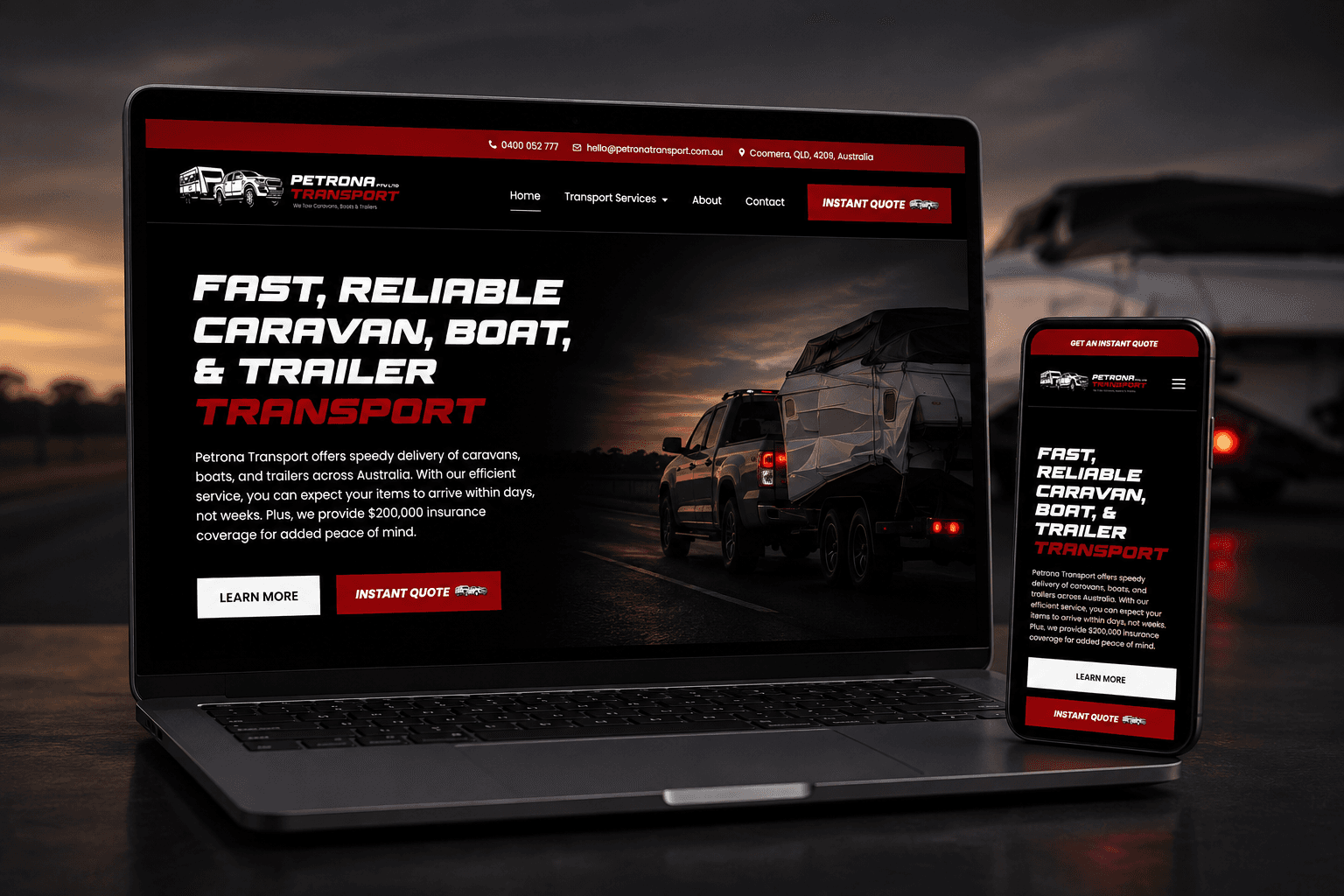
Clearer services, stronger search visibility and a simpler quote journey helped commercial customers take action.
Capacity, equipment, lane economics and customer fit should shape the strategy before keywords or page counts are discussed.
Clarify freight types, equipment, lanes, ideal customers and the enquiries your team can service profitably.
Review how buyers find, assess and brief the business across search, service pages and quote forms.
Build the pages, proof and pathways closest to valuable freight opportunities first.
Use quote quality and service demand to decide what should expand next.
Understand the fit, expectations and practical details before choosing an industry SEO or website partner.
Logistics SEO improves how a transport or logistics business appears when customers search for freight services, transport capability, lanes and related commercial needs. It combines service content, technical foundations, authority and a website journey that helps buyers confirm fit.
Local SEO is valuable for depots, local delivery and region-based services. Transport SEO may also need to cover interstate lanes, specialised freight, national buying journeys and commercial searches where proximity is only one part of the decision.
Only when the lane reflects a genuine service with distinct, useful information. Publishing a page for every possible origin and destination can create thin content. Priority lanes should be chosen around real capacity, customer demand and commercial value.
The right fields depend on the service, but origin, destination, freight type, dimensions or weight, frequency, timing and handling requirements are common. The form should capture enough to assess fit without forcing customers through unnecessary questions.
Yes. National visibility can be built around genuine services, lanes, industries and capability. The website needs a coherent structure and evidence that supports broader demand rather than duplicating generic city pages.
Useful measures include visibility for priority services, engagement with capability pages and the volume and quality of quote requests. Traffic matters only when it contributes to freight opportunities the operation can service.
Support longer commercial research and procurement journeys with clearer evidence.
Build wider visibility for freight services and national market demand.
Turn operational knowledge into useful service and decision content.
Collect the freight details your sales and operations teams need.
Build service-area visibility and quote journeys around suitable jobs.
Support complex buying decisions with expertise and commercial proof.
Connect local discovery with appraisal and property-service decisions.
Bring your priority services, lanes and current quote journey. You will get a practical view of where buyers lose confidence and which improvements deserve attention first.
This is a working session built around your business, not a templated audit or a disguised sales call.
See whether services, lanes and fleet information are clear to a new buyer.
Identify the commercial searches closest to the freight you want to grow.
Find the gaps causing vague, incomplete or poor-fit requests.
Speak directly with the specialist doing the work. No account manager, no obligation and no sales script.